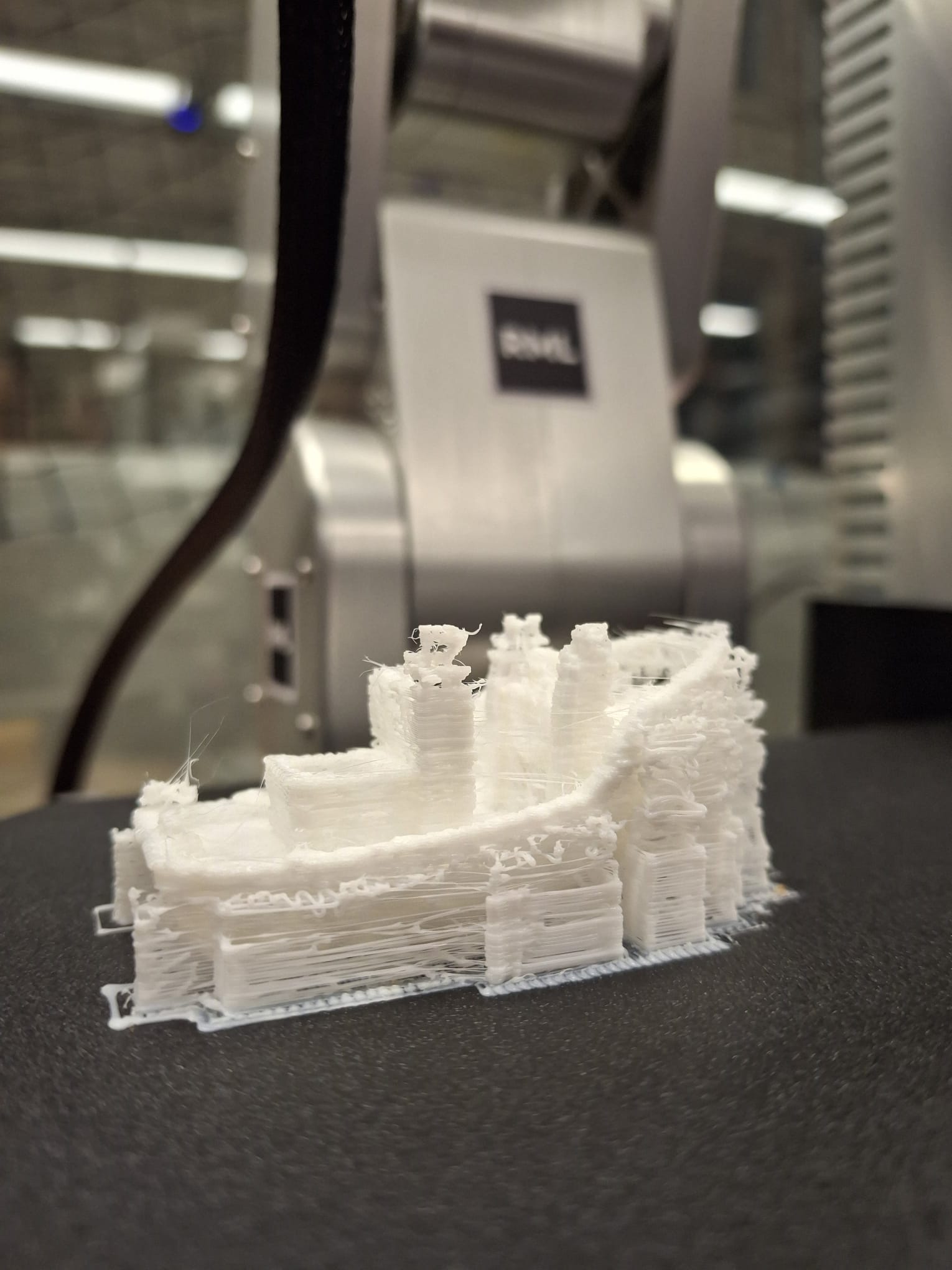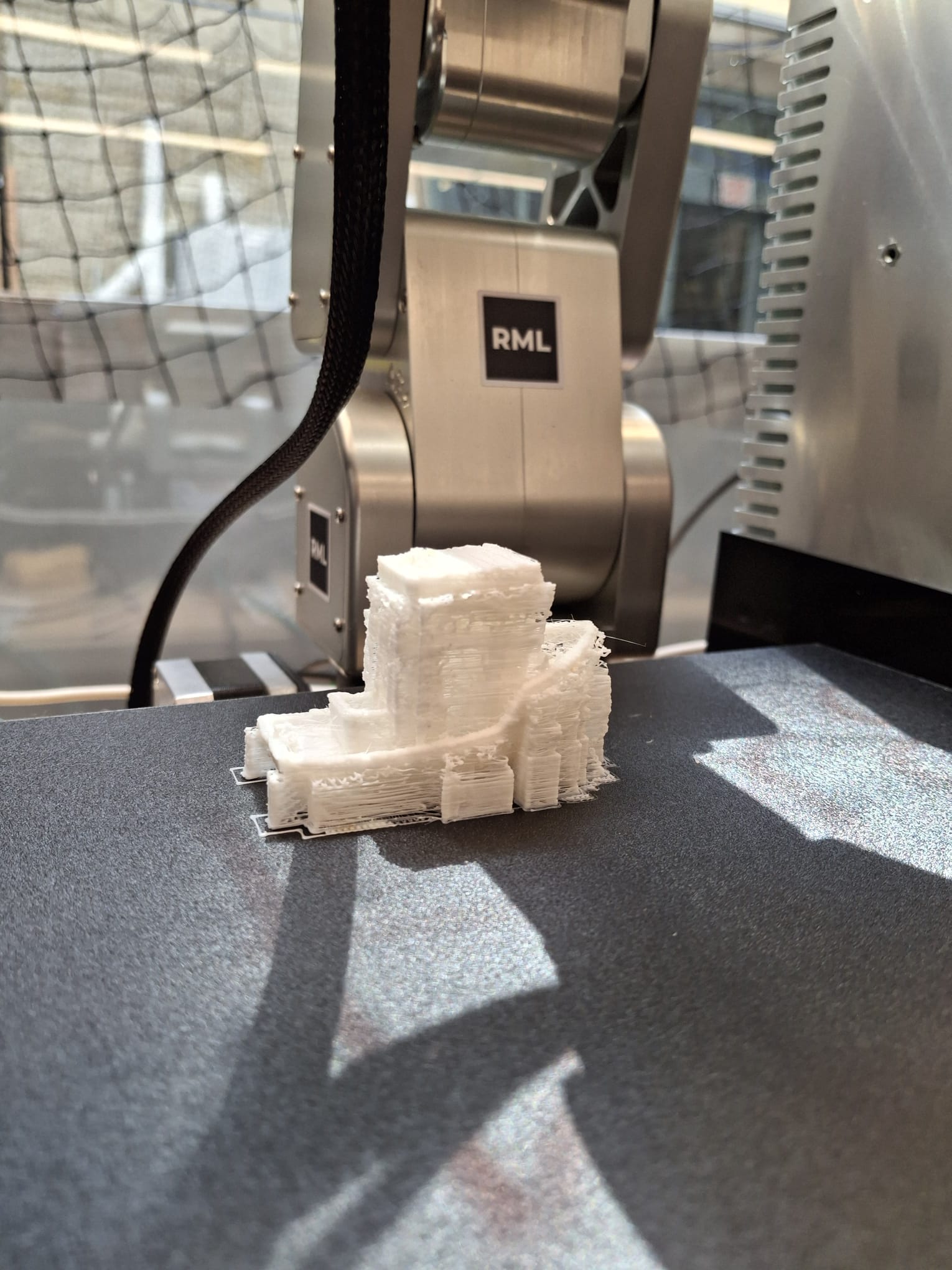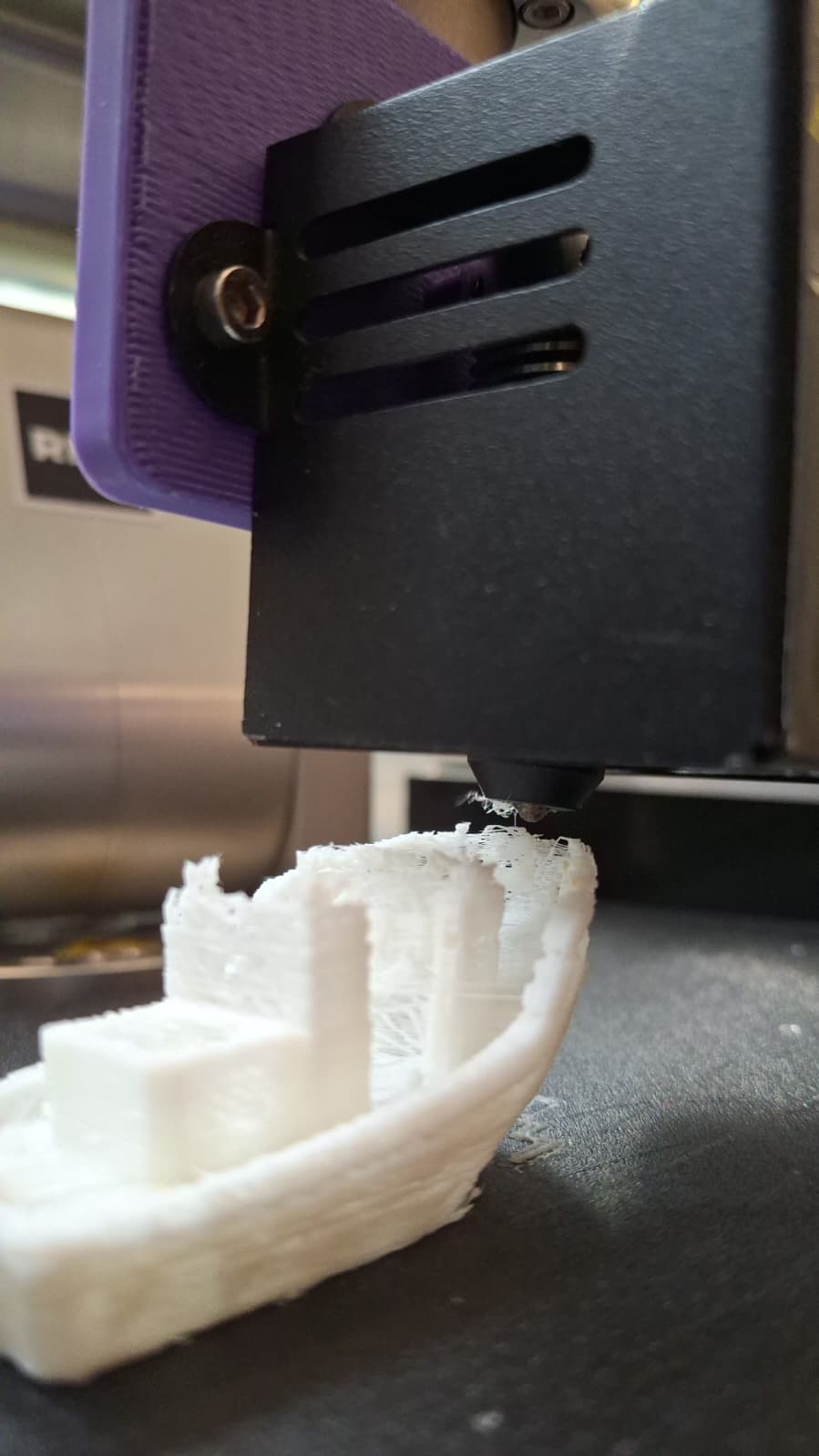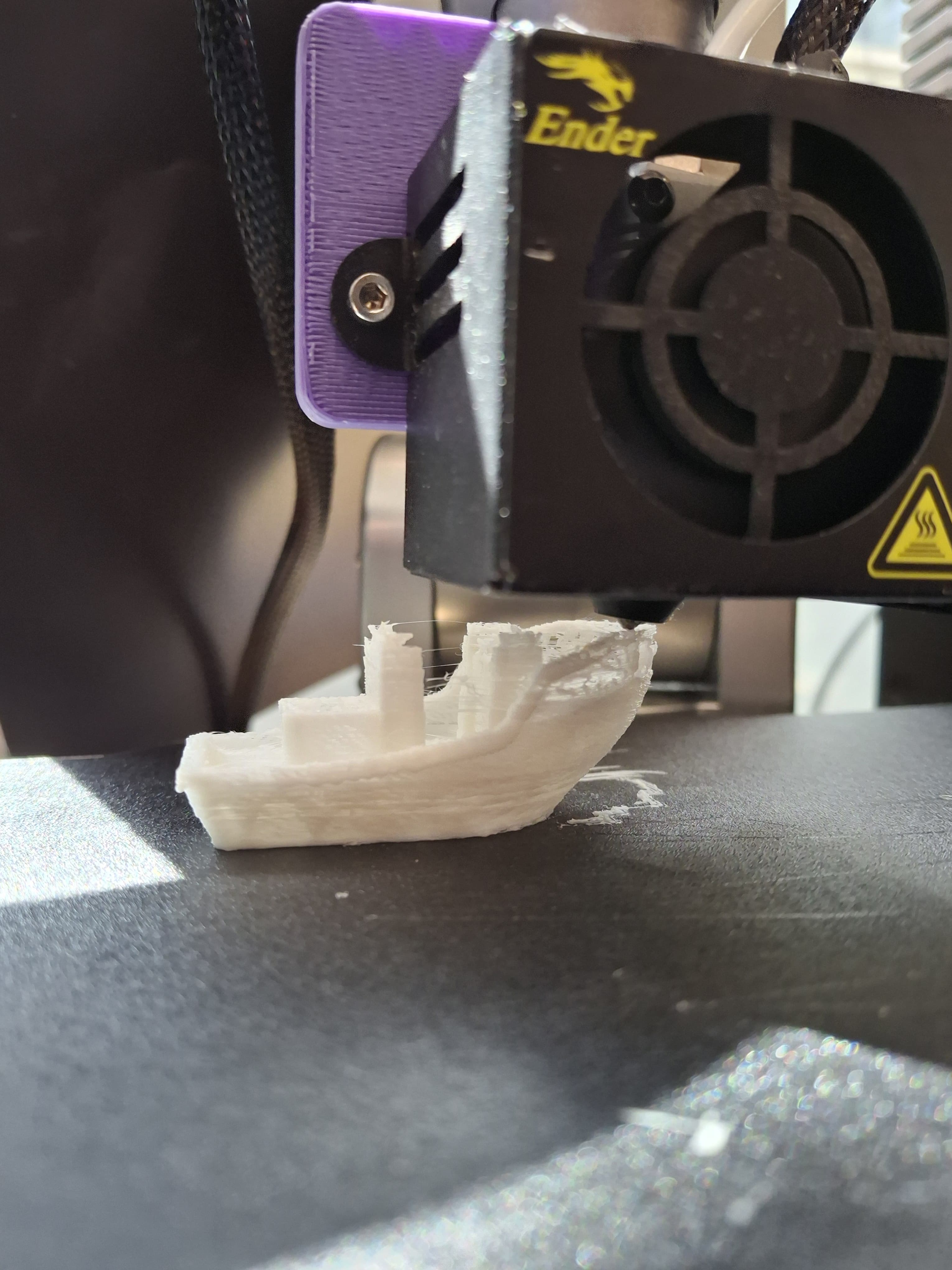
Overview
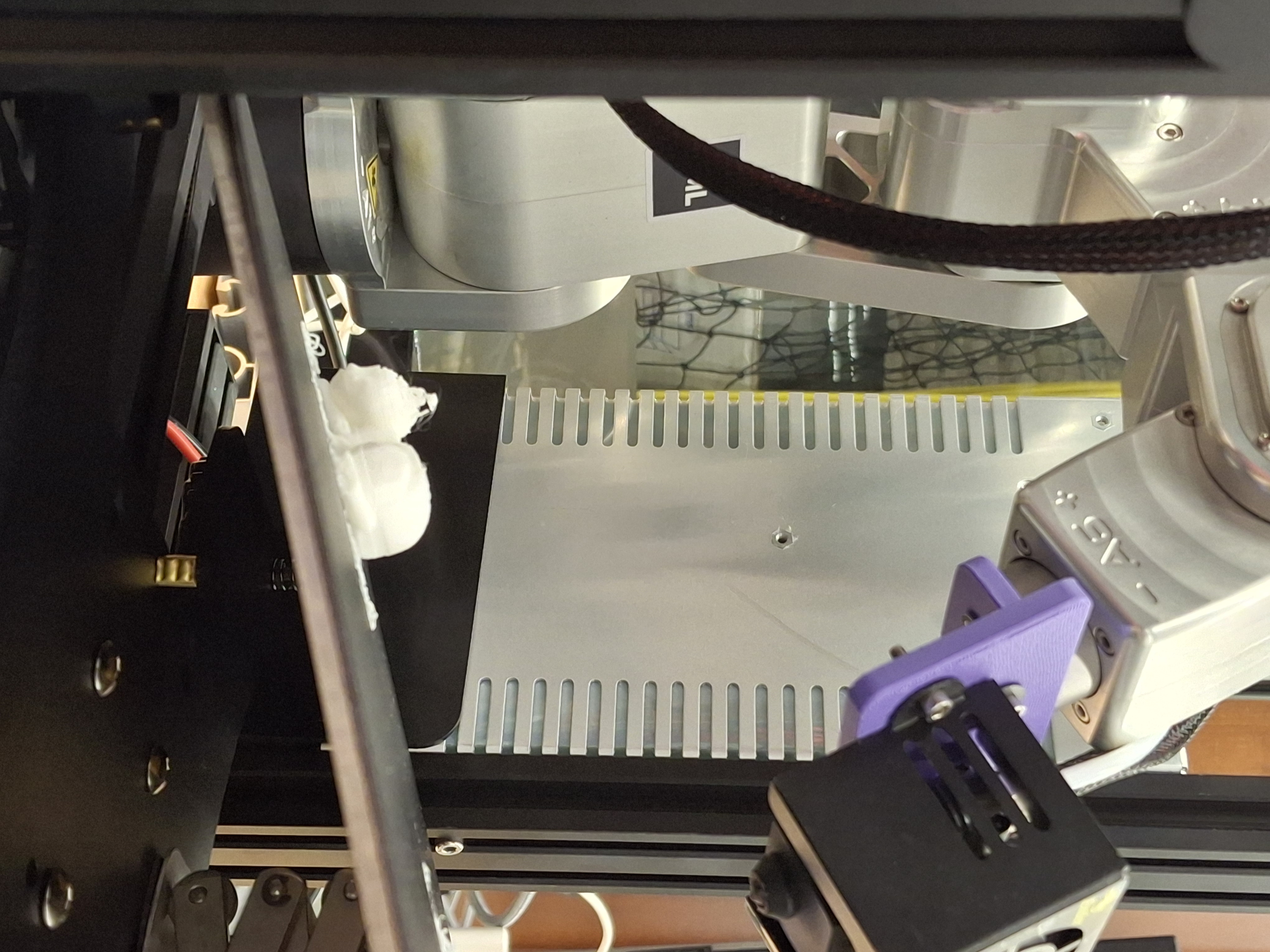
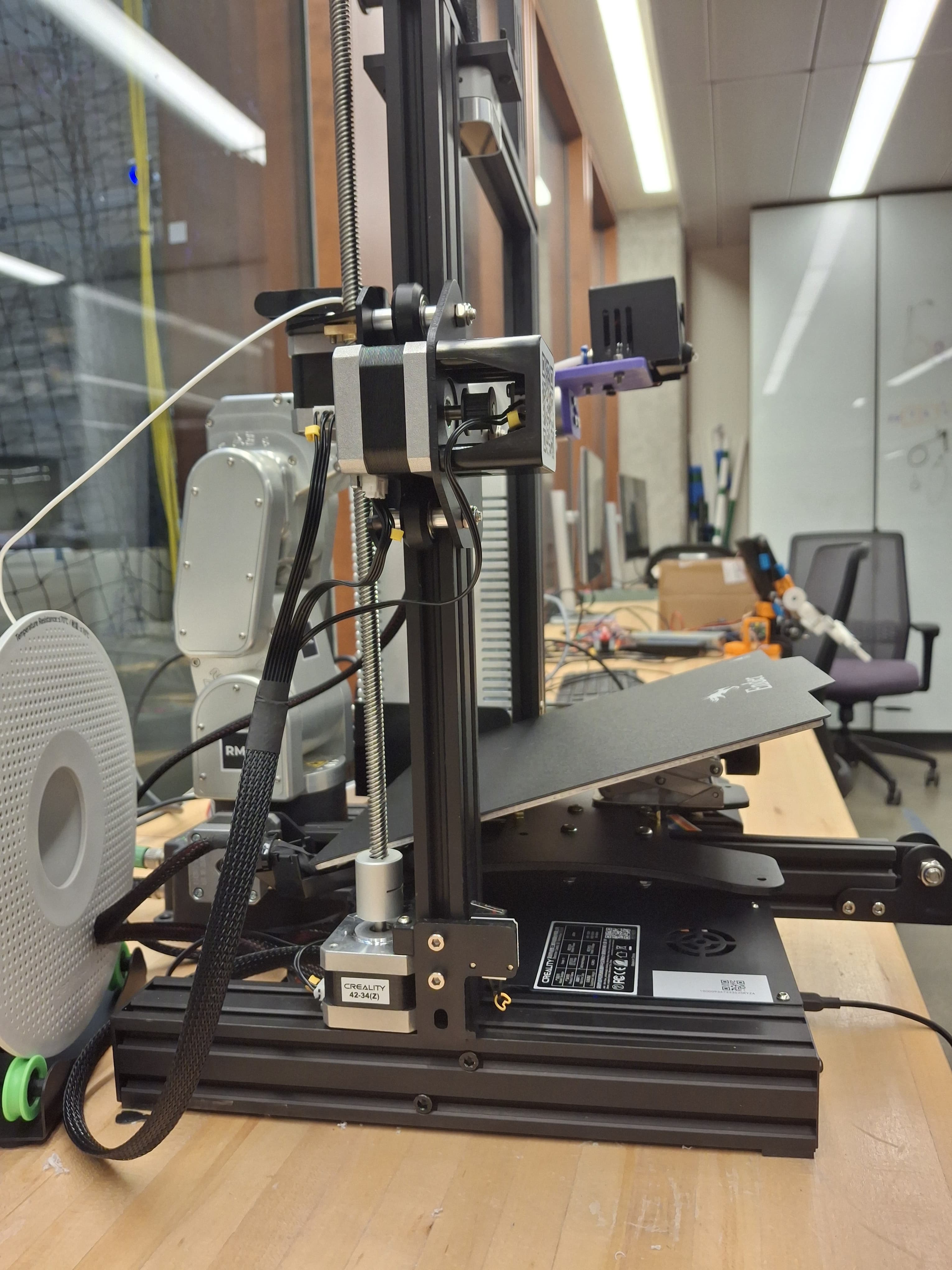
I built a ROS 2 package that drives a Meca500 6-DOF arm (5 μm resolution) as a 3D printer through MoveIt 2. A custom ros2_control hardware interface bridges the Meca500’s proprietary TCP API to MoveIt 2, so real trajectory planning and execution run on the physical arm. A mounted Ender3 extruder handles filament feed and heating over USB serial — the arm does all of the XYZ motion.
The print pipeline sweeps the robot’s reachable workspace, centers and clips sliced G-code onto the densest reachable region, then executes it through a patched build of MoveIt 2’s Pilz Industrial Motion Planner. Consecutive moves of the same type are grouped into batches, and each batch is planned as one blended sequence:
LINfor straight / extruding movesCIRCfor arcs, with Pilz’s colinearity tolerance lowered to match the Meca500’s 5 μm resolution
Before the arm moves, a pre-planning pass runs the whole file plan-only to discover the real feed-rate range, so extrusion can be rescaled to the Ender3’s physical limits.
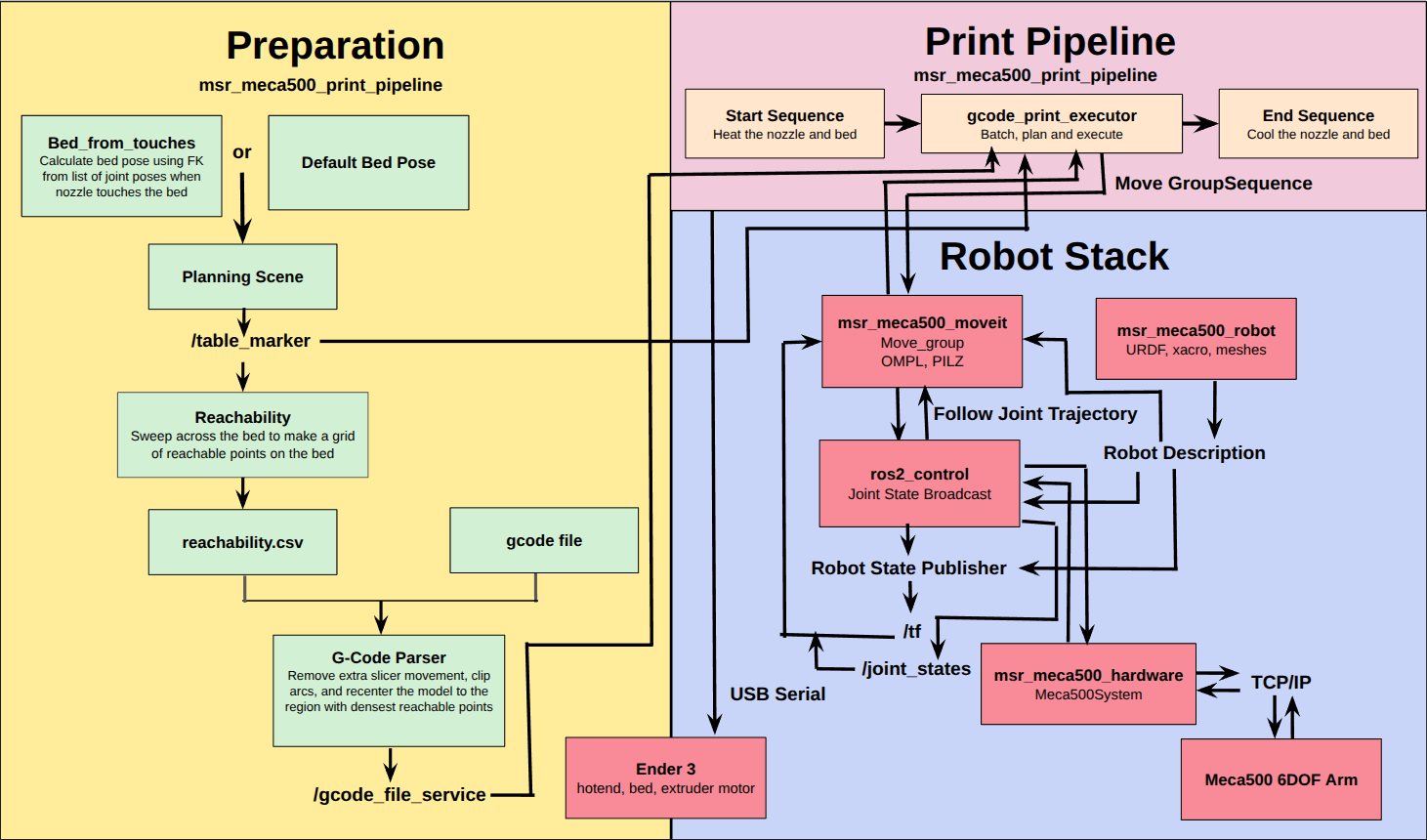
System Architecture
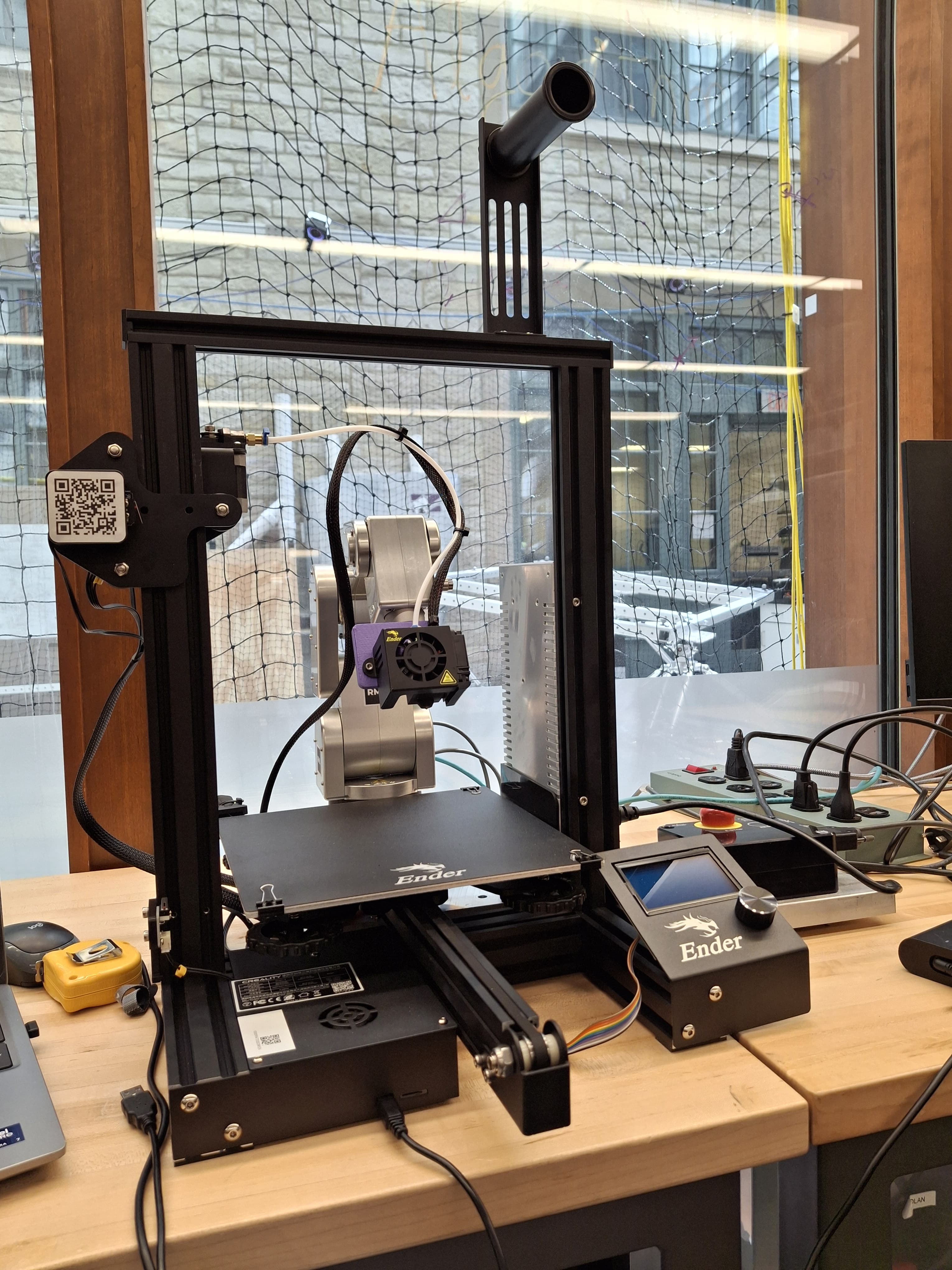
Full Setup
With flat bed
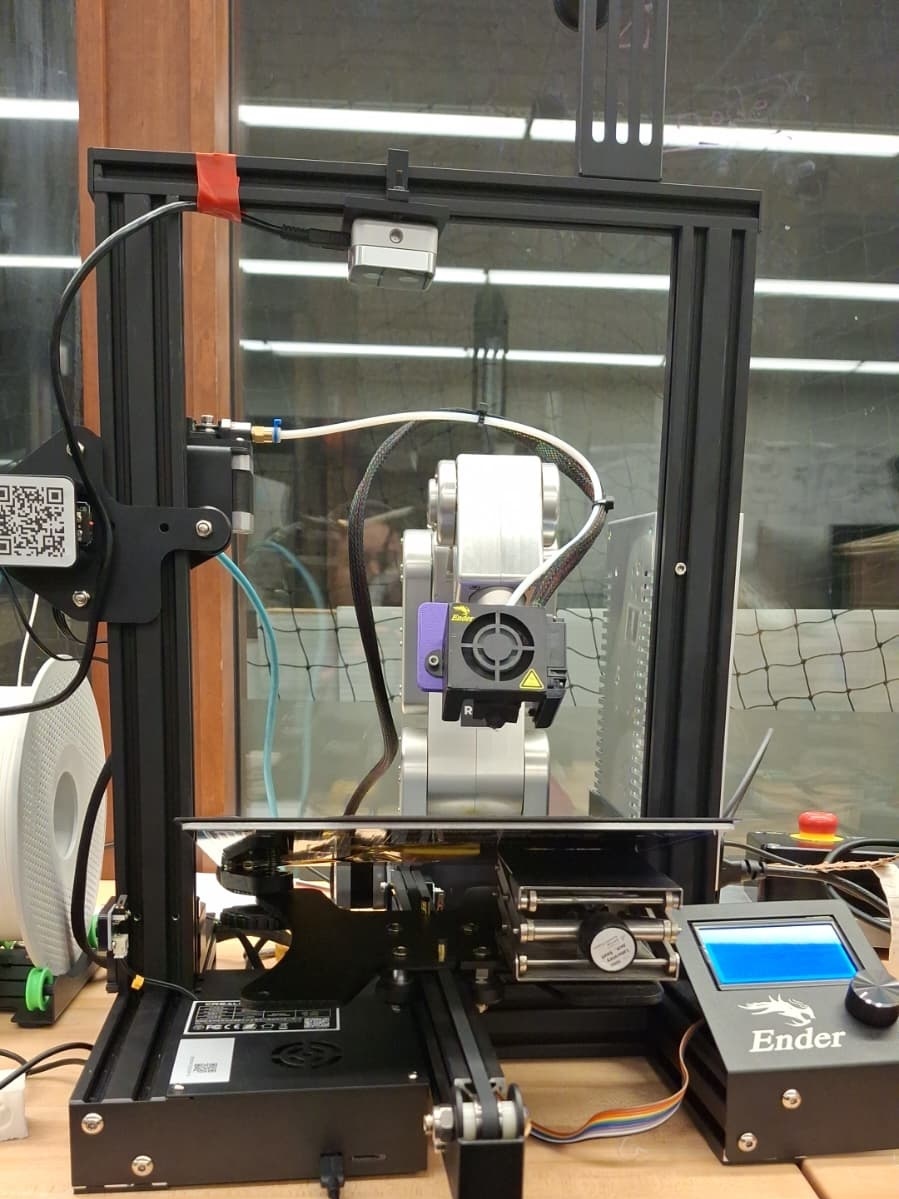
With bed at an angle
ROS 2 Package Breakdown
msr_meca500_hardware
The ros2_control hardware interface (Meca500System) brides the Meca500’s TCP API to MoveIt 2. It streams joint commands and state over control/monitoring ports 10000/10001; use_mock_hardware:=true swaps in mock_components for offline runs.
msr_meca500_moveit
MoveIt 2 configuration and demo.launch.py spawn move_group, robot_state_publisher, ros2_control, and the arm controller. I set up two planning pipelines: OMPL for free-space moves and a patched Pilz Industrial Motion Planner for LIN / CIRC.
msr_meca500_robot
The robot description (the meca500 arm, the mounted Ender3 extruder, the nozzle tool frame, and the print-bed environment) is modeled in URDF/Xacro. I made the extruder and background meshes toggleable (use_extruder, use_background) and swappable, so that I can drop in a different end-effector or rig later.
msr_meca500_print_pipeline
The full print pipeline package contains four nodes plus the launch scripts:
bed_from_touches :takes joint configurations recorded with the nozzle touching the bed, runs forward kinematics on each, and fits the bed plane by SVD. Publishes the result through/table_service. A flat default pose is used when no touch data is supplied.planningscene :holds the bed pose, publishes/table_marker, and registers the bed as a MoveIt collision object.reachability :sweeps an N×N grid over the bed for collision-free IK with an approach-standoff search, writingreachable_points.csv.gcode_print_executor :first plans the whole preprocessed G-code once without executing, to calibrate feed rates to what the extruder can actually push. It then groups the moves into batches by type and plans each batch as one blended Pilz LIN/CIRC sequence. Execution drives the arm through MoveIt while the Ender3 feeds filament and holds temperature over serial. Any arc Pilz can’t plan falls back to a straight line
Configuration lives in three YAML files: machine_settings.yaml (your hardware), bed_settings.yaml (touch-probe output), and print_tuning.yaml (author-tuned constants, including a first-layer nozzle_bed_gap trim).
msr_gcode
Contains a Python preprocessor I wrote that unzips the sliced .3mf, centers the print on the densest reachable region, drops out-of-workspace moves as gaps (no scaling or distortion), and repairs degenerate arc geometry and a C++ parser library the executor calls at run time.
Demos
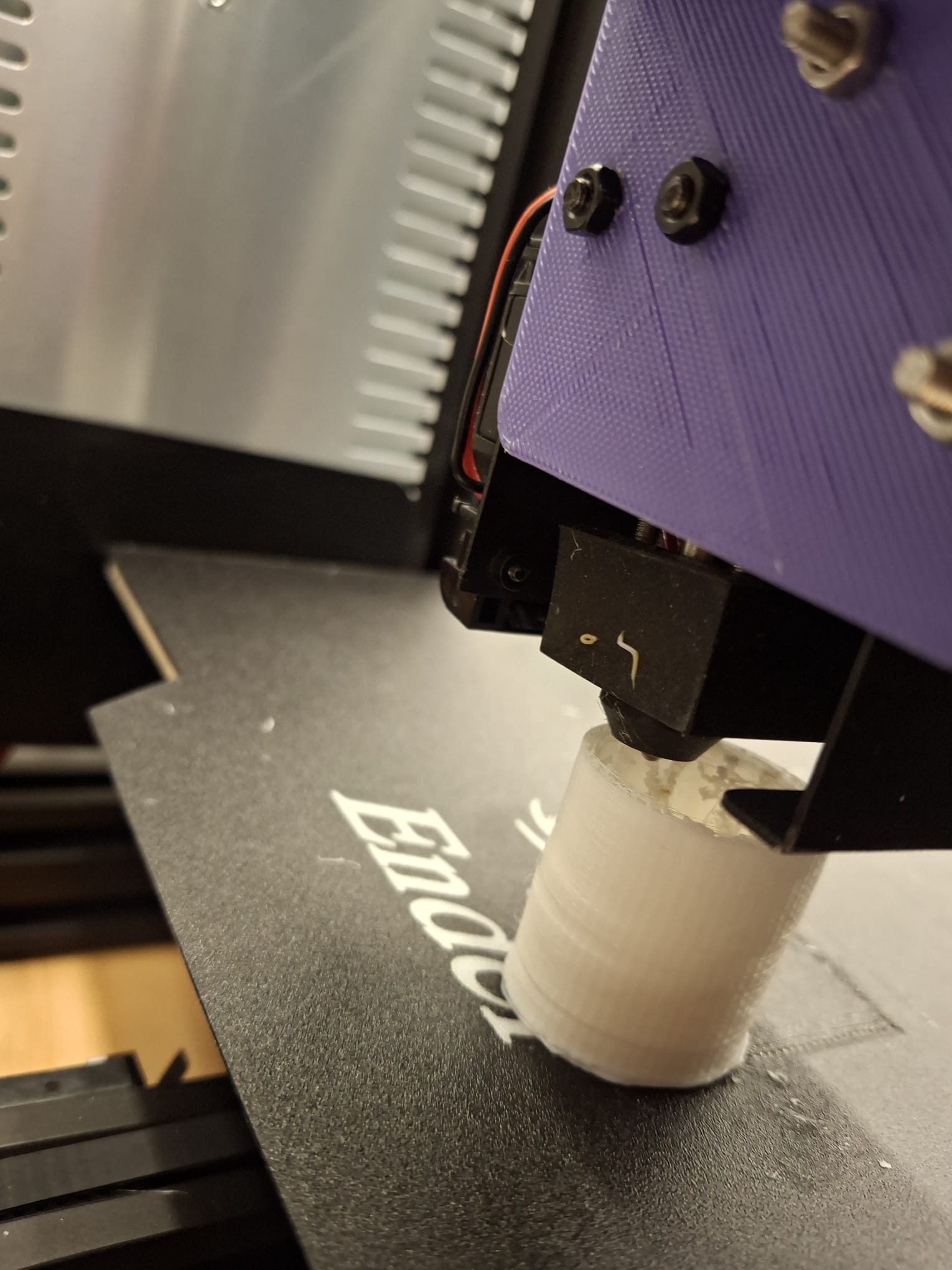
Below is the clip of my setup printing a 2.5cm cube with a hole of 1cm diameter in the middle with the bed at an angle:
Below are clips of my setup printing a 5 cm × 5 cm × 5 cm cube on real hardware.
In the RViz views below, the green line traces every sampled end-effector position and the purple line traces only where the nozzle was extruding. Both of the next two demos rely on my pipeline’s reachability-aware placement to fit the print onto the workspace.
My full pipeline plans and executes a sliced boat model (21 layers) in batched Pilz LIN / CIRC sequences on a flat bed:
With no extruder, I tilt the bed to an arbitrary pose via /table_service, and my pipeline prints a cube (7 layers) onto the reoriented surface:
Straight-line G1 moves sent directly through /goal_service and executed with the Pilz LIN planner:
A smoke test of msr_meca500_hardware, driving basic robot motion through the ros2_control hardware interface:
What’s Next
Next up: adaptive nozzle orientation for steep struts and overhangs.
Code
My full implementation is on GitHub.
Gallery